
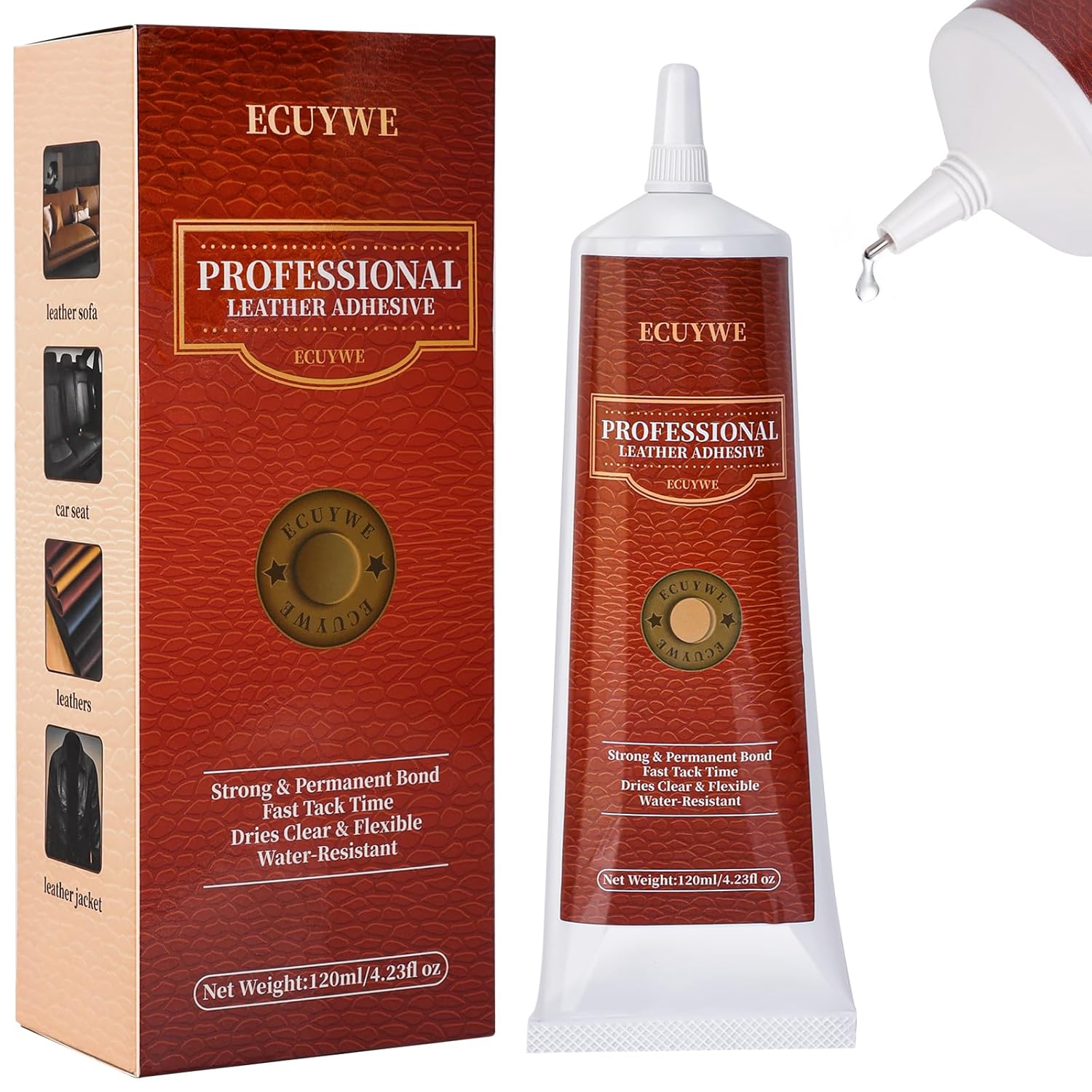
I still remember the day my favorite leather boots started to fail. The sole began to peel back like a banana skin. It happened right before a big trip to the mountains. I did not want to buy new boots. I loved the way these felt on my feet. I decided to fix them myself. That was my first real brush with Professional Leather Glue Adhesive – 120 ML Industrial Strength.
Since then, I have used this glue on many projects. I have fixed old belts and torn car seats. I even used it to mend a high-end leather bag for a friend. Through every spill and successful bond, I learned a lot. This isn’t just a review. It is a look at what actually happens when you try to stick two pieces of leather together forever.
<<Get Amazon For This Product>>
Why I Chose the 120 ML Size for My Projects
When you start a repair, you often wonder how much glue you need. I used to buy tiny tubes from the grocery store. Those tubes were always empty before I finished the job. They also dried out quickly. Switching to the Professional Leather Glue Adhesive – 120 ML Industrial Strength changed my workflow.
A 120 ml bottle is about 4 ounces. This size is the “Goldilocks” of adhesive containers. It is big enough to handle a full set of dining chair repairs. Yet, it is small enough to fit comfortably in one hand. I found that I could control the flow much better with this bottle.
The Practical Benefits of This Size
| Benefit | Why It Matters to Me |
| Portability | I can toss it in my tool bag without it taking up too much space. |
| Quantity | It provides enough glue for about 10 to 15 small-to-medium repairs. |
| Shelf Life | The cap seal on this size tends to be better than tiny disposable tubes. |
| Value | You pay much less per ounce than you do for the travel-sized versions. |
The First Time I Used Industrial Strength Glue
I was nervous the first time I opened the bottle. I was working in my garage on a Saturday morning. The smell was the first thing I noticed. Industrial glue has a very strong scent. It smells like a professional shoe repair shop. I quickly realized I needed to open a window.
The texture of the Professional Leather Glue Adhesive – 120 ML Industrial Strength was surprising. It was thicker than I expected. It did not run everywhere like water. Instead, it stayed right where I put it. I used a small scrap of wood to spread it thin.
I learned a hard lesson that day. More glue does not mean a better bond. In fact, if you put too much on, it just makes a mess. The glue oozes out the sides and gets on the finished leather. I spent twenty minutes cleaning up a smudge with a damp cloth. Now, I always use a very thin layer.
Handling the Bond and the Wait Time
One thing no one tells you is the “tack” time. You don’t just put the glue on and press the pieces together right away. If you do that, the leather will just slide around. You have to wait. I usually wait about five to ten minutes until the glue feels sticky but not wet.
Once it hits that sweet spot, you press the pieces together. The bond is almost instant. It feels like magic. I used a set of heavy clamps for my boot soles. I left them overnight in the cold garage. The next morning, the bond was rock solid.
Materials I Have Successfully Bonded
- Genuine Cowhide: Bonds almost instantly with deep penetration.
- Suede: Requires a very light touch so the glue does not soak through.
- Synthetic Leather: Works well if you scuff the surface with sandpaper first.
- Rubber Soles: This is where the industrial strength really shines.
The Real Test: Durability and Weather
I took those boots to the mountains two days after the repair. I walked through mud and shallow streams. I was sure the glue would give up. To my surprise, the seal held tight. The Professional Leather Glue Adhesive – 120 ML Industrial Strength is truly waterproof.
The glue stays flexible after it dries. This is the most important part. Leather moves and stretches. If the glue turned into hard plastic, it would crack. This adhesive moves with the leather. It feels like a part of the material rather than something stuck on top of it.
I also noticed that heat does not bother it much. I left a repaired bag in a hot car during a Florida summer. Many glues turn back into liquid in that heat. This industrial formula stayed firm. That gave me a lot of confidence in using it for car interior repairs.
Common Mistakes I Made So You Don’t Have To
I have had my fair share of failures. Once, I tried to glue leather that was still covered in old oil. The glue did not stick at all. It just peeled right off the next day. Now, I always clean the surface with a bit of rubbing alcohol first.
Another mistake was not using enough pressure. I thought just pressing with my hands was enough. For a long-lasting bond, you really need a heavy weight or a clamp. Even a heavy book works for flat items. The pressure forces the glue into the fibers of the leather.
My Quick Prep Checklist
- Clean: Remove all dust, dirt, and old oils.
- Scuff: Use 120-grit sandpaper to roughen the surface.
- Ventilate: Make sure you have a fan or an open window.
- Apply Thin: Use a brush or a spatula for an even coat.
- Wait: Let it get tacky before joining the parts.
Is 120 ML Worth the Price?
In my experience, yes. If you are doing a one-time fix on a tiny tear, you might not need this much. But if you have a household with leather goods, this bottle is a lifesaver. It is an investment in your gear.
I found that the cost of the Professional Leather Glue Adhesive – 120 ML Industrial Strength is much lower than a single professional repair. A cobbler might charge fifty dollars to fix a heel. You can do it at home for a fraction of that cost. Plus, you get the satisfaction of fixing it yourself.
Comparing Different Types of Leather Glue
Not all glues are the same. I have tried the white craft glues and the super glues. They usually fail. Super glue is too brittle for leather. It breaks the moment you bend the shoe.
| Glue Type | Strength | Flexibility | Best Use |
| Industrial Leather Glue | Very High | Excellent | Shoes, bags, belts |
| Super Glue | High | Very Low | Hard plastic repairs only |
| Craft Glue | Low | Medium | Paper or light fabric |
| Contact Cement | High | High | Large surface areas |
The Professional Leather Glue Adhesive – 120 ML Industrial Strength acts like a professional contact cement. It is built for the rigors of daily use. It is the only thing I trust for items that I wear every day.
My Final Thoughts on the Experience
Repairing things feels good. It feels better than throwing them away. This glue made those repairs possible for me. It is messy and it smells strong, but it works. It gives old items a second life.
I still have about half a bottle left. I keep it on a shelf in my garage. Every time I see a loose seam on a jacket or a peeling corner on a wallet, I know I can fix it. It has saved me hundreds of dollars over the last year.
Frequently Asked Questions
How long does it take for leather glue to dry?
The glue becomes tacky in about five to ten minutes. You should clamp the pieces for at least two hours. For the strongest bond, wait a full twenty-four hours before using the item.
Can I use this glue on suede boots?
Yes, but you must be very careful. Use a very thin layer so it does not seep through. If the glue reaches the surface, it will leave a dark stain that is hard to remove.
Is industrial leather glue safe for skin contact?
It is best to wear gloves when using it. The glue is very hard to wash off your fingers once it dries. If you get it on your skin, use warm soapy water or a bit of baby oil.
Does the glue dry clear or colored?
Most industrial leather glues dry to a slightly amber or clear finish. Because it is applied between layers, you usually cannot see it. Always wipe away any excess glue while it is still wet.
Will the bond hold up in the rain?
Once the glue is fully cured, it is highly water-resistant. I have worn repaired shoes in heavy rain many times. The bond stays strong and does not soften when wet.