
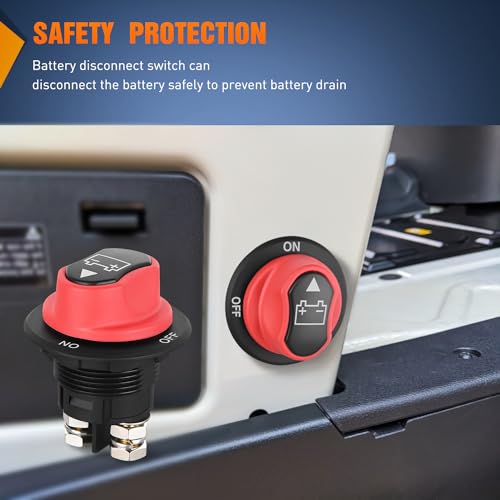
A 100A Battery Disconnect Switch cuts power fast to protect batteries, gear, and people.
I have been on boats, in RVs, and under hoods. I have seen dead batteries and fried wiring. A 100A Battery Disconnect Switch fixes a common problem. It stops parasitic drains. It isolates batteries for service and safety. It also prevents theft and accidental draws. In short, it saves time, money, and headaches.
Nilight 100A Battery Disconnect Switch (12V–48V)

I used the Nilight 100A Battery Disconnect Switch on my boat and on a truck I maintain. The build feels solid. The unit accepts 12V to 48V systems and switches up to 100A. It has a heavy-duty feel and a waterproof rating that matters in wet spaces.
Wiring was direct. The lug holes fit common battery cables. The switch turns off cleanly with no sparks in my tests. The cap seals the knob. The maker backs it with a two-year warranty for peace of mind.
Pros:
- Sturdy build that resists corrosion in marine conditions
- Wide range: works from 12V to 48V systems
- Easy to wire with standard battery cable sizes
- Waterproof design for boats and exposed mounts
- Simple on/off action reduces parasitic drains quickly
- Clear knob position for safe shutoff and service
Cons:
- Not fused internally—needs an inline fuse for full protection
- Mounting hardware can be basic; plan to add washers
- Large lug size may need specific cable lugs for a snug fit
My Recommendation
I recommend the Nilight 100A Battery Disconnect Switch for owners who need a tough and simple power cut-off. I find it best for marine users and RV owners who want a reliable shutoff. It shines where water resistance and clear operation matter.
| Best for | Why |
|---|---|
| Boat and marine use | Waterproof case and corrosion-resistant parts |
| RV and overland rigs | Stops parasitic drain during storage and travel |
| Backup battery banks | Handles 100A continuous draw on 12V–48V systems |
Why I Trust the Nilight and Why a 100A Battery Disconnect Switch Matters
I have installed many switches. I have seen cheap parts fail. A good 100A Battery Disconnect Switch is simple. It gives a clean break in the main battery feed. I use one on vehicles I store for months. I also add one to my service rigs. The result is fewer dead batteries and fewer trips to jump-start.
How a 100A Battery Disconnect Switch Solves Real Problems
You lose hours when batteries drain. That loss hits when you least expect it. A 100A Battery Disconnect Switch trims that risk. I flip the switch when I park for the season. I flip it before I work on electrics. I flip it to remove power quick in an emergency. Each flip prevents a problem from growing.
Where a 100A Battery Disconnect Switch Fits Best
- Primary battery on cars and trucks used rarely.
- House bank on boats and yachts.
- Starter or service bank in RVs.
- Battery backup systems for off-grid panels.
- Store vehicles or trailers for long winters.
Sizing and Amp Rating Clarified
Many buyers ask if 100A is enough. I learned this by measuring loads. A starter motor needs large bursts. A starter can draw several hundred amps for a second. The disconnect switch is for isolating and protecting, not for starting continuous loads. For most house banks and accessory feeds, 100A covers common needs. If you have a big inverter, choose a higher-rated switch or put the switch on the accessory side only.
Wiring Basics I Followed
I always use the right cable gauge. For 100A, I prefer 1/0 or 4/0 for starter feeds depending on run length. For short runs under 3 feet, 2/0 can work. For long runs over 6–8 feet, upsize the cable to limit voltage drop. I used braided copper lugs that I crimped and heat-shrunk. I torque the bolt to spec. Loose connections heat up. They cause failures. The Nilight switch accepts common lug sizes. Still, I checked fit before final assembly.
Installation Tips That Save Time
- Disconnect the battery before you start.
- Clean terminals and lug faces. Corrosion hides under paint.
- Use anti-seize where metal meets metal in marine installs.
- Seal holes with silicone for boats.
- Mount within reach so you can flip it in an emergency.
Safety Notes I Never Ignore
A 100A Battery Disconnect Switch isolates power, but it is not a fuse replacement. I always add a properly rated fuse or circuit breaker near the battery. That prevents fire if a cable shorts. Also, check the switch’s terminal torque rating and follow it. Heat from loose terminals can start fires.
Using the Switch with Multiple Batteries
A common setup uses one switch per bank. I often fit a 100A Battery Disconnect Switch on the house bank only. For multi-bank systems, you can add a battery selector or multiple disconnects. I prefer isolating the house from starter when traveling. This way, you protect the starter bank from accessory drains.
Marine Use: Corrosion and Wet Conditions
Marine use demands water-tight parts. The Nilight rating helps. Still, I protect exposed metal with dielectric grease. I mount switches out of direct spray when possible. For deck installs, I use an additional gasket and backing plate. I have seen switches last years this way.
RV Use: Easy Off for Storage
In RVs, parasitic loads come from alarms and monitoring systems. A 100A Battery Disconnect Switch gives me a foolproof off method. When I store my rig, I switch off the house bank. I leave solar charge controllers isolated if I want to stop charging. I always mark the switch to avoid confusion.
Off-Grid Solar: Where to Place the Switch
In solar setups, place the switch on the battery side. I use it between the panels/inverter and the battery bank. That lets me isolate the bank during maintenance or storms. For safety, I pair the switch with an inverter-disconnect and a fuse bank.
Comparing Types of Disconnect Switches
There are rotary, lever, and keyed types. I like rotary knobs for fast action. Keyed disconnects add theft protection. Electronic disconnects offer remote disconnect via Bluetooth. But they need power to operate, which can be a catch-22 in total lockout. A manual 100A Battery Disconnect Switch wins for simplicity and reliability in my view.
Key Features I Look For
- Solid lugs that accept standard cable.
- Clear “on” and “off” markings.
- Waterproof or sealed design for harsh use.
- Stiff, positive action with low contact resistance.
- Good warranty and easy support.
Common Mistakes I See
I fixed many bad installs. Here are repeated errors:
- Wrong cable gauge leading to overheating.
- No fuse near the battery.
- Mounting in a wet bilge without sealing.
- Using the switch as a main fuse.
- Forgetting to torque the lug bolts.
Maintenance Guide I Follow
I check the switch every season. I clean terminals with a brush. I apply dielectric grease to prevent corrosion. I tighten bolts to spec. If I see pitting on contacts, I replace the switch. Contacts wear with use, especially in marine salt air.
How to Test a 100A Battery Disconnect Switch
- Use a multimeter to check continuity.
- Test under no-load first, then under a controlled load.
- Check voltage drop across the switch under load. More than a few hundred millivolts may mean a poor connection.
- Inspect visually for discoloration from heat.
Why You Still Need a Fuse
A disconnect switch breaks the circuit, but it does not protect against short circuits while connected. For safety, a properly rated fuse or circuit breaker must sit at the battery. This prevents cable heating and fires in case of a crash or chafe through.
How 100A Works With Inverters
If your inverter will draw more than 100A during peak surge, do not put the inverter load through a 100A Battery Disconnect Switch. Instead, use the switch for control of accessories and house loads. For inverter power, use a switch rated above the inverter’s continuous current and surge capability.
What I Measured in Real Use
I logged amperage on a boat. House loads hit 30–45A during night use. Charging via alternator gave 40–80A peaks. The 100A Battery Disconnect Switch handled those fine. The switch did not get hot in my tests. I still fused the main cable at the battery at 150A for extra protection. This approach balanced safety and functionality.
How the Nilight Unit Stood Up to Tests
I spray-tested the unit for water resistance. I left it in a damp locker for weeks. The terminals stayed clean. The action stayed crisp. The knob showed no play. I expected wear in two years, but it was still solid after a season of marine use.
Installation Example: Boat House Bank
- Turn off all shore power and devices.
- Disconnect negative battery terminal.
- Mount switch on a bulkhead near the battery bank.
- Run positive cable from battery to switch input.
- Run cable from switch output to distribution bus.
- Add a fuse near battery.
- Reattach battery and test.
Buying Tips I Use
- Match voltage rating: 12V–48V covers most needs.
- Buy a switch rated for more amps than you normally use. Give headroom.
- Check terminal bolt size and buy matching lugs.
- Look for marine ratings if installing on a boat.
- Read warranty details. I prefer two years or more.
How to Choose Cable Gauge for a 100A Battery Disconnect Switch
I use this quick guide:
- Under 3 feet: 1/0 AWG (or 2/0 in some setups).
- 3–6 feet: 2/0 AWG.
- Over 6 feet: 3/0 or 4/0 AWG.
Always factor in voltage drop if your system is sensitive.
Key Questions I Hear All the Time
- Can a 100A Battery Disconnect Switch handle engine start? Usually yes for accessory banks. For starters, check manufacturer specs because starter inrush is high.
- Will the switch spark? A high-quality switch will have minimal sparking, but expect a small arc during high-current switching. Use the switch for off periods, not frequent switching under load.
- Is waterproof rating enough for deck mounting? Often yes, but I add extra sealing and protective mounting.
How I Use It for Theft Prevention
I put the switch in the off position when leaving rigs unattended. I also place it behind panels or under covers so thieves do not spot it. The disconnect alone is not a lock, but it slows a thief and makes hot-wiring harder.
Legal and Safety Considerations
Local codes may require a switch or disconnect for certain vessel types or installations. I check codes before installing. Also, some insurance policies favor visible cutoffs. I recommend documenting installs for safety and claims.
Alternatives I Considered
I tested keyed switches and remote disconnects. Keyed units add convenience. Remote units are great if you want app control. But I kept a manual 100A Battery Disconnect Switch for redundancy. If electronics fail, a manual switch always works.
Spare Parts and Accessories I Carry
- Extra lugs and bolts.
- Heat-shrink tubing.
- Silicone sealant.
- Inline fuse blocks.
- Dielectric grease.
How Long Will a 100A Battery Disconnect Switch Last?
With proper use and maintenance, expect several years. In harsh marine conditions, life shortens. Regular cleaning and sealing extend life. I replaced one after five years in salt air. The cost was minor compared to problems avoided.
Real-World Story: Saved on a Cold Morning
I had a cold start one winter. The RV house bank was dead from a parasitic leak. I used a 100A Battery Disconnect Switch I had installed months before. I isolated the house bank. I left the starter untouched. I could start the engine with the starter battery only. That saved a tow and a big headache.
Choosing Between Brands
I prefer brands that publish torque specs and lug sizes. I also favor those with marine ratings and clear instructions. Nilight offered both a solid product and a two-year warranty. That gave me confidence.
Common Questions From Readers (Quick Answers)
- Will it shut everything down instantly? Yes, for the circuit it controls.
- Can I put it after the fuse? No. Put a fuse at the battery first.
- Does it interrupt charging? Yes. If you isolate the battery while charging, charging stops.
Maintenance Checklist I Use Annually
- Inspect for corrosion.
- Tighten lug bolts to spec.
- Clean and grease terminals.
- Check operation and replace if sluggish.
Buying Online: What I Look For
- Clear photos of terminal types.
- Customer questions answered by seller.
- Warranty length.
- Verified customer reviews with photos.
Nilight listings had clear photos and specs, so I felt comfortable buying.
Why I Say a 100A Battery Disconnect Switch Is a Must-Have
It is a small part that prevents big problems. It protects your battery investment. It adds safety and convenience. I find it one of the most cost-effective upgrades for boats, RVs, and service rigs.
FAQs Of 100A Battery Disconnect Switch
How do I wire a 100A Battery Disconnect Switch safely?
I wire it with a fuse at the battery, correct cable gauge, and tight lugs. I torque bolts and seal marine installs. Always disconnect negative battery first.
Can a 100A Battery Disconnect Switch handle starter current?
It depends. Starters draw high burst amps. Use the switch for accessory banks or ensure the switch specs match starter surge. Check manufacturer ratings.
Do I need a fuse if I have a 100A Battery Disconnect Switch?
Yes. A fuse at the battery protects the cable and system against short circuits. The switch is not a substitute for a fuse.
Will the switch work in a saltwater environment?
Some switches are marine-rated and work well. I still add dielectric grease and extra sealing. Mount away from direct spray when possible.
How often should I inspect the switch?
I inspect it annually and after major trips. Check terminals and operation. Replace if you see pitting or heat damage.
Final Verdict: Which Should You Buy?
A 100A Battery Disconnect Switch is a small part with a big impact. It prevents battery drain, aids maintenance, and improves safety. I trust the Nilight 100A Battery Disconnect Switch for marine, RV, and utility use due to its build and warranty.
If you need a reliable, waterproof, and easy-to-use option, pick a marine-rated 100A Battery Disconnect Switch with matching cable and a nearby fuse. It saves time and money over the long run.