
Cleaning my retainer used to be a chore I hated. I remember sitting in my bathroom last Tuesday, looking at my clear plastic trays. They looked cloudy and felt a bit gross. I had been using a regular toothbrush for months, but it just wasn’t working. My dentist told me that a standard brush has bristles that are too soft for the tough buildup but too sharp for the plastic. That is when I decided to try a dedicated denture cleaner brush dental retainer cleaning (green) tool.
It sounds like a small change, but it made a huge difference. If you wear dentures, a night guard, or a clear retainer, you know the struggle. You want them to stay clear and fresh, but food and plaque love to stick to them. Using a green denture brush changed my routine for the better. It feels like I am finally using the right tool for the job.
<<Get Amazon For This Product>>
My First Impression of the Green Denture Brush
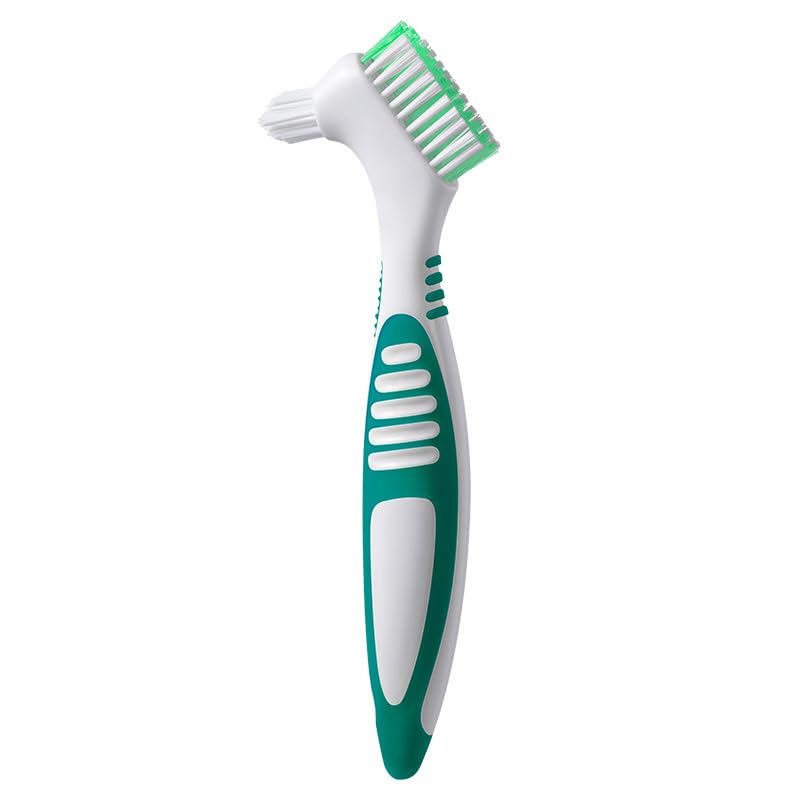
When I first held the denture cleaner brush dental retainer cleaning (green), I noticed the weight. It felt solid in my hand. Most of these brushes have a bright green handle that is easy to spot in a messy drawer. The grip is usually made of rubber. This is great because my hands are always wet when I am at the sink.
The brush has two sides. One side has a wide, flat head. This is for the large parts of the denture or retainer. The other side has a small, pointy tuft of bristles. This little part is the “secret sauce.” It gets into the tiny gaps where my front teeth sit. I used to miss those spots all the time.
Quick Comparison of Cleaning Tools
| Feature | Standard Toothbrush | Green Denture Brush |
| Bristle Type | Soft/Medium | Firm/Multi-layered |
| Reach | Hard to hit deep curves | Tapered tuft for gaps |
| Grip | Thin and slippery | Thick rubberized grip |
| Durability | Wears out in 3 months | Lasts 6+ months |
How the Stiff Bristles Actually Feel
I was worried the stiff bristles would scratch my retainer. I spent a lot of money on my smile, and I didn’t want to ruin it. However, I found that the denture cleaner brush dental retainer cleaning (green) is firm but smooth. It doesn’t “dig” into the plastic. Instead, it sweeps away the film that makes the retainer look yellow.
Last night, I tried a little experiment. I used a bit of mild soap and the green brush. I spent about two minutes scrubbing every nook. When I rinsed it off, the plastic was crystal clear. It felt smooth against my tongue again. That “fuzzy” feeling was totally gone. It felt like I had just picked them up from the ortho office.
Why the Color Green Matters to Me
You might wonder why I keep mentioning the color. For me, it is about safety. My partner uses a different kind of brush for their tasks. Having a bright denture cleaner brush dental retainer cleaning (green) means I never mix them up. It stays in my “clean zone” by the sink. The green color is a visual cue that tells my brain, “This is for your mouth, keep it clean.”
Learning from My Past Mistakes
I will be honest; I used to use boiling water to clean my trays. I thought heat killed bacteria. I was wrong. I ended up warping a very expensive pair of retainers. Now, I use lukewarm water and my green brush. This tool helps me be more gentle. Because the bristles do the hard work, I don’t have to press down as hard.
Another mistake was using toothpaste. Did you know toothpaste has tiny rocks in it? They are called abrasives. They help scrub your teeth, but they leave tiny scratches on dentures. Bacteria hide in those scratches. Now, I only use the denture cleaner brush dental retainer cleaning (green) with a specialized soak or plain soap. My gear stays clearer for much longer this way.
A Day in the Life with My Cleaning Routine
Every morning, I take my retainer out. I am usually tired and in a rush. I grab my green brush and give it a quick thirty-second scrub. The ergonomic handle is easy to use even when I am half-asleep. I focus on the “well” of the tray where saliva pools.
- Rinse the retainer in cool water.
- Apply a drop of non-abrasive cleaner to the green brush.
- Use the large head for the outer walls.
- Use the small tuft for the deep grooves.
- Rinse and store in a dry case.
This routine is fast. It keeps me from having to do deep cleans every weekend. The denture cleaner brush dental retainer cleaning (green) makes it easy to stay consistent. Consistency is the only way to avoid that bad “retainer breath” we all fear.
What Could Be Better?
No tool is perfect. The green brush is a bit bulky. If you have a very small travel case, it might not fit inside. I have to keep mine on the counter or in a cup. Also, the bristles are very firm. If you have very sensitive gums and touch them by accident, it might tingle. But for the appliance itself, it is just right.
I also noticed that the bristles can hold onto a bit of water. I make sure to shake mine out really well after I use it. I don’t want any mold growing in the brush head. I usually replace my denture cleaner brush dental retainer cleaning (green) every six months to keep things fresh.
Durability and Value
| Part | Material | Expected Life |
| Handle | Heavy-duty Plastic | 2 Years |
| Bristles | Nylon | 6 Months |
| Grip | Synthetic Rubber | 1 Year |
Why You Should Consider the Switch
If you are still using a free toothbrush from the dentist, give it a rest. Spending a few dollars on a real denture cleaner brush dental retainer cleaning (green) is worth it. It saves time and protects your investment. Your dentures or retainers will last longer and look better.
I feel more confident when I smile now. I know my retainer isn’t yellow or smelly. It’s a small tool, but it solved a big problem for me. If you want a cleaner mouth and a simpler morning, this green brush is the way to go. It is simple, effective, and very affordable.
Frequently Asked Questions
Can I use a green denture brush on my clear Invisalign trays?
Yes, it works great on clear aligners. Use the small tuft to clean the tiny bumps in the trays. Be sure to use cool water so you do not melt the plastic.
How often should I replace my denture cleaner brush?
You should get a new one every six months. If the bristles start to bend or look frayed, replace it sooner. A fresh brush cleans much better than a worn one.
Is the green handle easy to grip for people with shaky hands?
Yes, most green denture brushes have a thick, rubber grip. This makes them much easier to hold than a thin toothbrush. It stays steady even when your hands are wet or soapy.
Do I need to use special soap with this brush?
You do not need fancy soap, but avoid abrasive toothpaste. A mild dish soap or a dedicated denture paste works best. This keeps the plastic smooth and free of scratches.
Can I put my denture brush in the dishwasher to clean it?
It is better to hand wash it with warm soapy water. High heat in a dishwasher might melt the glue holding the bristles. Just rinse it well and let it air dry after every use.